The History Of Group F/64: Pioneers Of Straight Photography
Group f/64 is as one of the most influential photography collectives in American art history, and honestly, it's a story that every serious photographer should know. Formed in San Francisco, California, in 1932, this revolutionary group of photographers fundamentally changed the landscape of American photography by championing what they called "Straight Photography" or "Pure Photography." Named after the smallest aperture setting on large format cameras, f/64, the group rejected the soft-focus romanticism of Pictorialism in favor of sharp, un-manipulated images that celebrated photographic clarity and precision.
As someone who spends considerable time photographing California's diverse landscapes, I have tremendous respect for what these photographers accomplished. They didn't just take pictures—they established photography as a legitimate art form and created a aesthetic foundation that continues to influence photographers like myself nearly a century later.
Origins and Formation
Historical Context
In the early 1930s, American photography was dominated by the Pictorialist movement, which emphasized soft focus, romantic subjects, and heavily manipulated prints that mimicked painting techniques. It's hard to imagine now, but photography was still trying to prove itself as an art form worthy of gallery walls. A growing number of California-based photographers began to rebel against this aesthetic, seeking a more honest and direct approach to the medium.
The Founding
Group f/64 was officially formed in November 1932 in San Francisco, California. The founding members gathered to create a unified voice for their shared aesthetic philosophy and to challenge the prevailing photographic trends of their time. What I respect most is that they weren't just rebelling—they were creating something entirely new.
Key Formation Details:
- Date: November 1932
- Location: San Francisco Bay Area, California
- Primary Meeting Place: Willard Van Dyke's gallery at 683 Brockhurst Street in Oakland
- Founding Philosophy: Rejection of Pictorialism in favor of "Straight Photography"
Group f/64 Core Members and Contributors
The group consisted of both founding members and associates who contributed to their exhibitions and philosophical development. These weren't just photographers—they were artists who understood that technique and vision had to work together.
Founding Members
| Member | Role/Specialty | Notable Contribution |
|---|---|---|
| Ansel Adams | Landscape Photography | Yosemite and Western landscapes; later became the most famous member |
| Edward Weston | Still Life & Nudes | Pioneered sharp-focus modernist photography; shells and pepper series |
| Imogen Cunningham | Botanical & Portrait Photography | Plant studies and industrial photography |
| Willard Van Dyke | Documentary & Landscape | Provided gallery space; later became filmmaker |
| Henry Swift | Landscape Photography | Earned living as a stockbroker and only pursued photography for several years |
| Sonya Noskowiak | Portrait & Still Life | Edward Weston's assistant and partner |
| John Paul Edwards | Landscape & Portrait | Local California photographer |
Associate Members and Contributors
- Consuelo Kanaga - Social documentary photography
- Alma Lavenson - Industrial and architectural photography
- Brett Weston - Son of Edward Weston; landscape photography
- Preston Holder - Documentary photography
The Philosophy of Straight Photography
Core Principles
Group f/64 developed a manifesto that outlined their revolutionary approach to photography. Their philosophy was refreshingly straightforward—let photography be photography, not an imitation of painting.
Fundamental Beliefs:
- Photography should exploit the unique qualities of the camera and lens
- Images should be sharp from foreground to background
- No manipulation of the photographic process beyond basic development and printing
- Subject matter should be rendered with maximum detail and clarity
- The photograph should stand as a work of art in its own right, not imitate painting
Technical Approach
The group's name directly referenced their preferred technical methodology, and this is where things get really interesting for us photographers:
Key Technical Elements:
- f/64 Aperture Setting: The smallest aperture available on large format cameras
- Deep Depth of Field: Everything in the frame rendered in sharp focus
- Large Format Cameras: Typically 4x5 or 8x10 inch view cameras
- Contact Printing: Prints made the same size as negatives to preserve maximum detail
- Minimal Post-Processing: Straight printing without manipulation
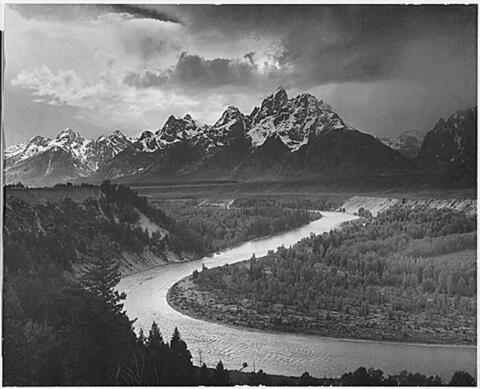
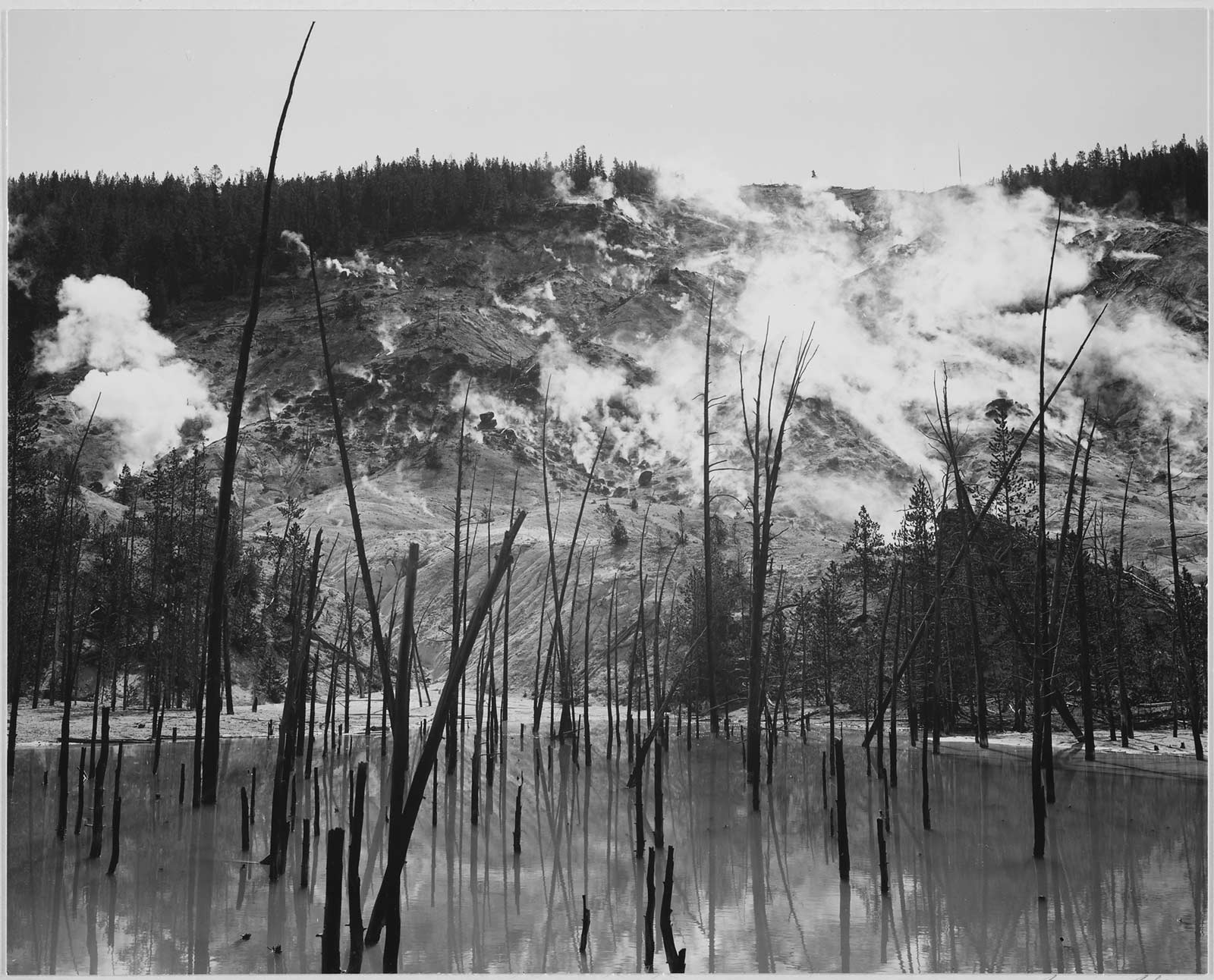
What's remarkable is how these technical choices supported their artistic vision. By using f/64, they could render every detail from the closest foreground to the distant mountains with razor-sharp clarity—something that was revolutionary at the time.
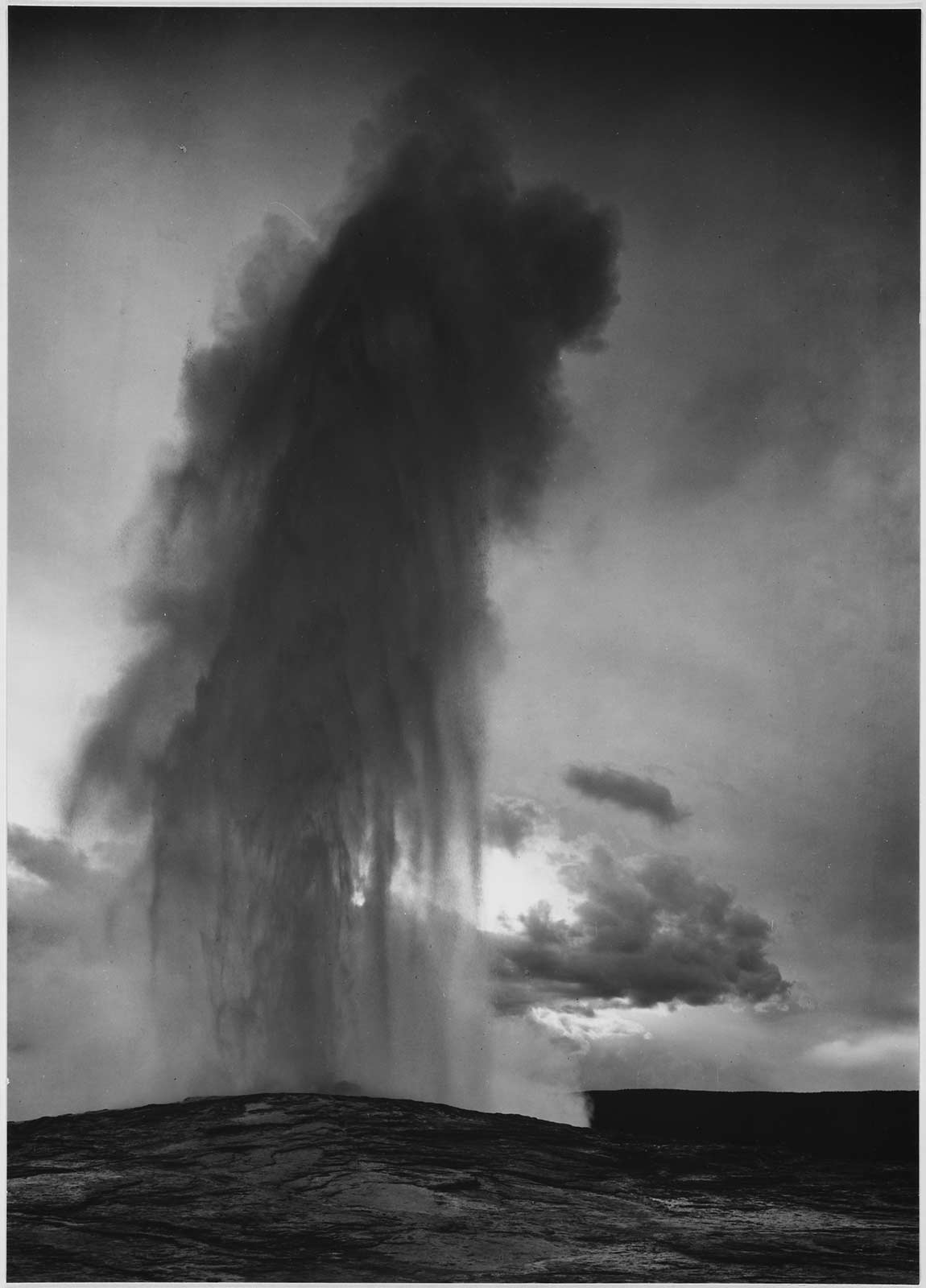
It is worth mentioning however that some of Ansel Adams' most famous photos in later years was characterized by heavy burning and dodging within the darkroom. The early prints of "Moonrise, Hernandez, New Mexico" look nothing like the later prints which burned in the sky to black with significant dodging of the cemetery in the foreground, in addition to removing some clouds.
The Signature Exhibition
The Historic 1932 Exhibition
Group f/64's only official group exhibition opened on November 15, 1932, at the M.H. de Young Memorial Museum in San Francisco. This wasn't just another art show—it was a declaration of independence for photography as an art form.
Exhibition Details:
- Venue: M.H. de Young Memorial Museum, San Francisco
- Duration: November 15 - December 31, 1932
- Participating Artists: All seven founding members
- Total Works: Approximately 80 photographs
- Catalog: Featured the group's manifesto and artistic statement
Exhibition Impact
The exhibition was groundbreaking for several reasons that still resonate today:
- First major museum exhibition of "Straight Photography"
- Established Group f/64 as a legitimate artistic movement
- Provided a platform for their anti-Pictorialist manifesto
- Demonstrated the artistic potential of unmanipulated photography
Geographic and Cultural Context
California as Creative Laboratory
The group's formation in California was not coincidental, and as someone who's spent years exploring this state with my camera, I can understand why. California provided unique advantages for their artistic development that you simply couldn't find anywhere else.
Geographic Advantages:
- Diverse Landscapes: From Yosemite's granite formations to Death Valley's stark beauty
- Unique Light Conditions: California's clear atmosphere ideal for sharp photography
- Industrial Growth: Bay Area's rapid development provided urban and industrial subjects
- Cultural Distance: Geographic separation from East Coast art establishment allowed experimentation
Key California Locations in Their Work
Living and photographing in California myself, I'm constantly amazed by how these locations continue to inspire photographers today. Here's where the Group f/64 members found their most iconic subjects:
| Location | Primary Photographers | Subject Matter |
|---|---|---|
| Yosemite National Park | Ansel Adams | Granite cliffs, waterfalls, alpine landscapes |
| Point Lobos | Edward Weston | Rocky coastline, marine forms |
| Monterey Peninsula | Edward Weston, Brett Weston | Coastal landscapes, cypress trees |
| San Francisco Bay Area | Willard Van Dyke, Imogen Cunningham | Urban architecture, industrial subjects |
| Death Valley | Ansel Adams | Desert landscapes, geological formations |
Technical Innovation and the f/64 Aperture
Understanding f/64
The technical choice of f/64 was central to the group's aesthetic philosophy, and it's something that every photographer should understand:
Technical Specifications:
- Aperture Size: Extremely small lens opening
- Depth of Field: Everything from near foreground to infinity in sharp focus
- Exposure Requirements: Long exposure times due to small aperture
- Image Quality: Maximum sharpness and detail rendering
Impact on Photographic Technique
The f/64 approach required specific technical considerations that influenced how photographers worked:
Required Equipment and Techniques:
- Large format view cameras for maximum detail
- Sturdy tripods for long exposures
- Careful composition since everything would be in focus
- Precise exposure calculation
- Contact printing to preserve detail
As a landscape photographer myself, I have deep appreciation for the patience and technical skill this approach required. There were no digital sensors to boost ISO, no image stabilization—just pure technical mastery.
Artistic Legacy and Influence
Immediate Impact (1930s-1940s)
The group's influence was felt almost immediately:
- Established photography as a legitimate fine art medium
- Influenced museum collecting policies for photography
- Inspired documentary photography movements
- Contributed to the development of American modernism
Long-term Influence
Educational Impact:
- Ansel Adams' Zone System became standard photographic technique
- Group's aesthetic principles taught in art schools worldwide
- Influenced generations of landscape photographers
Institutional Recognition:
- Major museums began collecting photography seriously
- Photography departments established in art museums
- Critical writing about photography developed as academic discipline
The Group's Dissolution and Individual Careers
Reasons for Dissolution
Group f/64 officially disbanded by 1935, just three years after formation. Sometimes the most impactful movements burn bright and brief:
Contributing Factors:
- Members' individual artistic evolution
- Geographic dispersion of members
- Success of individual careers
- Achievement of primary goals (establishing Straight Photography)
Post-Group Careers
Ansel Adams:
- Became America's most famous landscape photographer
- Developed the Zone System of exposure and development
- Founded photography workshops and educational programs
- Co-founded Aperture magazine
Edward Weston:
- Continued pioneering modernist photography
- Received first Guggenheim Fellowship for photography (1937)
- Mentored numerous younger photographers
- Created iconic images of American West
Imogen Cunningham:
- Continued botanical and portrait photography
- Lived and worked until age 93
- Influenced feminist photography movements
- Documented San Francisco art community
Museums and Collections
Major Institutional Holdings
If you want to see Group f/64 work in person, these institutions have the best collections:
| Institution | Location | Notable Holdings |
|---|---|---|
| San Francisco Museum of Modern Art (SFMOMA) | San Francisco, CA | Comprehensive Group f/64 collection |
| Metropolitan Museum of Art | New York, NY | Representative works from all members |
| Center for Creative Photography | Tucson, AZ | Ansel Adams Archive |
| George Eastman Museum | Rochester, NY | Historical photography collection |
| J. Paul Getty Museum | Los Angeles, CA | Edward Weston Archive |
Contemporary Relevance
Digital Age Parallels
Modern digital photography has seen renewed interest in Group f/64 principles, and I find myself applying many of their concepts in my own work:
Contemporary Applications:
- Focus stacking techniques achieve similar depth of field
- Straight photography aesthetic in documentary work
- Minimalist post-processing approaches
Educational Value
Group f/64's approach remains relevant for photography education and continues to influence how I approach my own work:
- Emphasis on technical mastery
- Understanding of light and composition
- Appreciation for photographic medium's unique qualities
- Balance between technique and artistic vision
Summary
Group f/64's brief but intense three-year existence fundamentally transformed American photography, and their influence continues to shape how we think about the medium today. By championing technical precision, honest representation, and the unique qualities of the photographic medium, they established photography as a legitimate fine art form and created a aesthetic foundation that still guides photographers nearly a century later.
What strikes me most about their legacy is how they valued the inherent properties of photography itself. In rejecting the imitative aspects of Pictorialism, Group f/64 helped establish photography's independence as an art form, paving the way for all subsequent developments in fine art photography.
Their emphasis on California's diverse landscapes also helped establish the American West as a significant subject for fine art landscape photography, influencing environmental awareness and conservation efforts through the power of their precisely rendered images. As someone who continues to photograph these same landscapes, I'm constantly reminded of the foundation they laid for all of us who followed.
The group's commitment to technical excellence and artistic vision created a standard that remains challenging and inspiring today. While photography technology has evolved dramatically since their time, the core principles they established—technical mastery in service of artistic vision—remain as relevant as ever.
Be the first to view new artwork releases, be notified of artist events and receive promotional offers.