Caring For Fine Art Photography Prints: A Collector's Guide
Fine art photography prints are substantial investments that can last multiple generations when cared for properly. After 25 years of selling prints to private collectors, hospitals, offices and interior designers, the most common post-purchase question I get is some version of "how do I make sure this lasts?" This article covers everything I tell my clients about protecting their artwork from fading, damage and the everyday hazards that shorten the life of a print.
The short version: modern museum-grade print materials are remarkably durable if you avoid a few specific mistakes. The fact is that most print damage I see after the fact is preventable, and it almost always comes down to where the print was hung, how it was cleaned, or how it was stored between moves.
What Causes Fine Art Photography Prints to Fade?
Prints fade primarily from UV exposure. Direct sunlight is the obvious culprit but indirect daylight through a window will also slowly bleach a print over years. Fluorescent lighting emits UV as well, which is why older office prints often look washed out while a print hung in a dim hallway from the same era looks fine.
Humidity and moisture are the second major factor. Paper prints in particular are sensitive to both high humidity (which encourages mold and can cause emulsions to soften) and extremely low humidity (which makes paper brittle). The recommended range for fine art preservation is 40 to 50 percent relative humidity at 65 to 75 degrees Fahrenheit. If you live somewhere with dramatic seasonal swings a whole-home humidifier / dehumidifier combo is worth it for art, musical instruments and wood furniture alike.
Atmospheric pollutants are the quiet third factor. Cooking smoke, fireplace smoke, cigarette smoke and pollution from busy roads all leave residue on artwork over time. This residue is hard to remove once it bonds to the print surface so the better approach is to not hang art where it will collect any of this in the first place.
How Long Do Fine Art Photography Prints Last?
All three of the print types I offer are rated as archival with a display life measured in decades to centuries. The table below summarizes how they compare.
| Print Type | Rated Display Life | Built-In Protection | Best Environment |
|---|---|---|---|
| Canson Infinity cotton rag | 200+ years | None (requires UV-filtering glazing when framed) | Indoor, climate-controlled |
| TruLife Acrylic face mount | 100+ years | Blocks 99% UV, anti-static, scratch-resistant | Indoor, including variable light |
| ChromaLuxe metal tuxedo mount | Decades indoors, weather-resistant | Image embedded in coating, moisture-resistant | Indoor, high-traffic, humid rooms |
Canson Infinity cotton rag prints are rated for 200+ years under proper storage conditions. This rating is based on accelerated aging tests by the Wilhelm Imaging Research lab, which is the industry standard for fine art print longevity. "Proper storage" in this context means framed under UV-filtering glass or acrylic, indoors, away from direct sunlight, at normal room humidity.
TruLife Acrylic face mount prints have additional built-in UV protection. The acrylic itself blocks up to 99 percent of UV rays so the print underneath is insulated from the single biggest source of fading. This means a TruLife print tolerates walls with indirect daylight better than a paper print would, though direct sunlight is still something I'd avoid even with the UV protection. The proprietary coating also resists scratches and repels static, which is more relevant to daily handling than to longevity but still worth mentioning.
ChromaLuxe metal tuxedo mount prints use a dye-sublimation process where the image is baked into a coated aluminum sheet. The dyes are embedded in the coating rather than printed on the surface, which makes these prints genuinely weather-resistant. They hold up for decades in indoor environments and outperform paper and acrylic in high-humidity spaces such as hotels and hospitals. I don't generally recommend hanging fine art outdoors however the point stands: these are the most durable print medium I offer.
Where Should You Hang Fine Art Photography Prints?
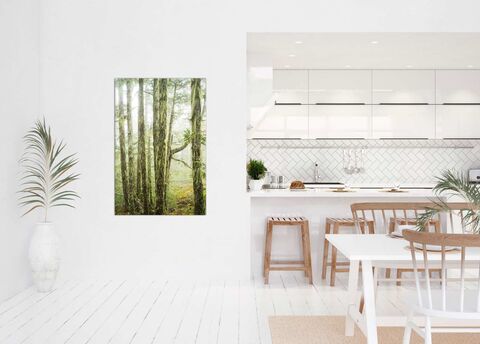
Hang prints away from direct sunlight. This is the single most important rule and the one most commonly ignored. A south-facing wall that gets afternoon sun is the worst place to hang a valuable print. A north-facing interior wall is the best.
Avoid hanging artwork above working fireplaces. Fireplaces combine heat, smoke and soot into a small zone right above the mantel where we culturally love to hang art. I'm not going to tell you never to do this but be aware of the tradeoff. If you rarely use the fireplace then it's less of an issue.
Different rooms put different stresses on a print, which is worth considering when choosing a substrate for a specific space:
| Room | Canson Paper | TruLife Acrylic | ChromaLuxe Metal |
|---|---|---|---|
| Living room, bedroom, office | Ideal | Ideal | Good |
| Hallway, dining room | Ideal | Ideal | Good |
| Kitchen | Not recommended | Caution (grease, heat) | Ideal |
| Bathroom | Not recommended | Not recommended | Ideal |
| Above working fireplace | Not recommended | Not recommended | Caution |
| High-humidity climate | Caution | Good | Ideal |
| Sunlit / south-facing wall | Not recommended | Caution | Caution |
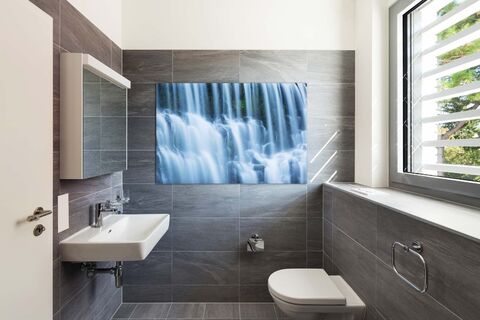
Kitchens and bathrooms are fine for ChromaLuxe metal prints but not ideal for paper or acrylic. The grease, humidity and temperature swings in a kitchen are harder on paper fibers and acrylic adhesives over time than a living room environment is. I've sold a lot of ChromaLuxe prints to clients for exactly this reason. They hold up in high-traffic, higher-humidity areas where a Canson print might not.
How Do You Clean TruLife Acrylic Face Mount Prints?
TruLife Acrylic is easier to clean than standard museum acrylic, which is part of why I use it. Standard museum acrylic requires proprietary cleaners because regular glass cleaner will strip the anti-reflective coating and ruin it. TruLife is engineered specifically to avoid this problem.
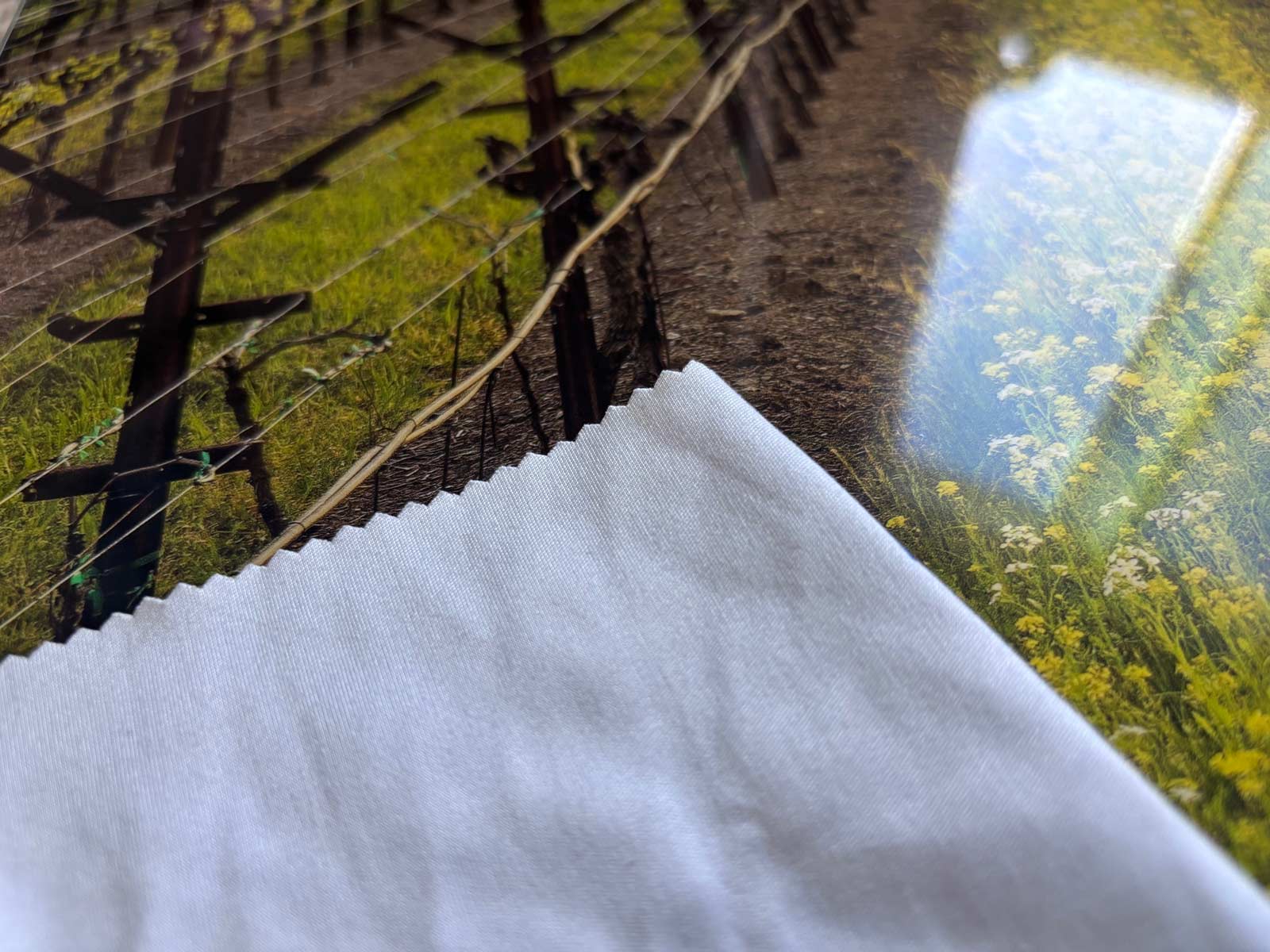
For routine dusting, use a soft microfiber cloth. That's it. The anti-static coating on TruLife repels dust better than standard acrylic so most of the time a light pass with a clean microfiber is enough.
For smudges or fingerprints, you can use standard glass cleaner such as Brillianize or a damp microfiber. I would still avoid ammonia-based cleaners as a precaution however, but spray-on glass cleaners formulated for everyday use are fine. This is genuinely one of the practical advantages of TruLife over other acrylic face mount options. You don't need to buy a special acrylic cleaner.
Never use paper towels, tissues or abrasive cloths. These will leave micro-scratches on the acrylic surface that become visible under certain lighting even if you don't notice them at first.
How Do You Clean ChromaLuxe Metal Prints?
ChromaLuxe metal prints are the easiest of the three to maintain. Use a soft damp cloth with water or mild soap, then dry with a microfiber. The dye-sublimated image is embedded in the coating so there's no risk of damaging the image surface with typical household cleaners. Avoid anything abrasive or scouring-based but beyond that you have a lot of latitude.
These prints can handle moisture, humidity and occasional splashes without issue. That's the whole reason they're used in hospitals, hotels and restaurants. If you spill something on one in a kitchen, just wipe it off. It's not a dealbreaker.
How Do You Care For Canson Infinity Paper Prints?
Canson paper prints need to be framed to be safely displayed. Unlike my ready-to-hang acrylic and metal options, loose paper is vulnerable to bending, tears, humidity and handling damage. Get them framed within a reasonable time frame after they arrive rather than leaving them sitting in a tube indefinitely.
When framing, specify UV-filtering glass or UV-filtering acrylic glazing. This is the single most important framing decision for print longevity. Standard glass offers essentially no UV protection and will let your print fade faster than necessary. Museum glass and conservation-grade acrylic both block 99 percent of UV.
Ask your framer for archival materials throughout: acid-free mat board, acid-free backing and archival mounting hinges rather than permanent adhesives. A good custom framer will do this by default however some will cut corners with cheaper materials if you don't specify. The framing can easily cost more than the print itself on a large piece so if you've invested in the artwork, don't undercut the investment with bad framing.
How Do You Store Fine Art Photography Prints?
If a print isn't being displayed, store it flat when possible. Paper prints should be stored flat in an archival folder or acid-free box. Rolling is a last resort for large prints that can't fit anywhere flat and even then they should be rolled image-side out around a large-diameter tube, not tightly around a small one.
ChromaLuxe and TruLife Acrylic prints should be stored upright in their original packaging or a similar protective container. Both ship in custom wooden crates and these crates are genuinely the best long-term storage solution if you have the space for them.
The same environmental rules apply to storage as to display:
- Temperature: 65 to 75 degrees Fahrenheit, stable year-round
- Relative humidity: 40 to 50 percent
- Light: dark or low-light storage, never direct sunlight
- Avoid: attics (heat), garages (pollutants and swings), basements prone to flooding
A closet in a climate-controlled part of the house is ideal.
What If Your Print Is Damaged?
Contact me first. If the damage happened during shipping then send me photos of the damaged print and packaging within 48 hours of delivery then we can get it re-printed. If it happened after you've owned the print for years, I can usually print a replacement for a reasonable fee on open edition prints, or discuss options for limited editions on a case-by-case basis.
Questions About Print Care?
The print is the physical object you take home but what you're really buying is the image and the relationship with the artist who made it. I'm here to help you enjoy my prints for decades so if you have questions about care, display, re-framing, or anything else that comes up after your purchase, please reach out. I respond personally to every message and I'd rather you ask a simple question than guess.