
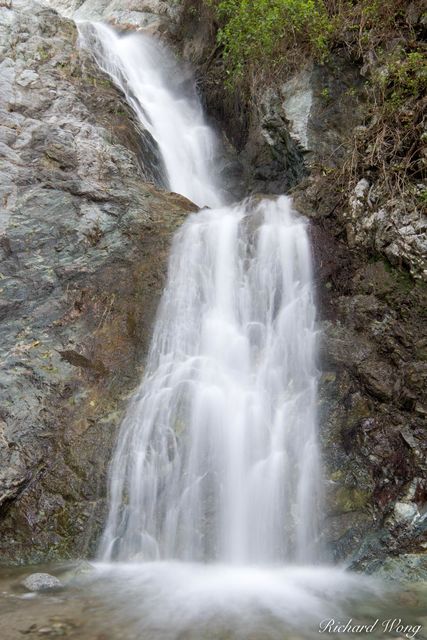

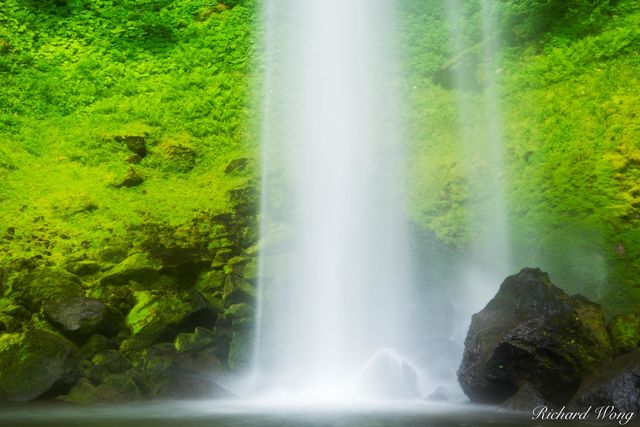
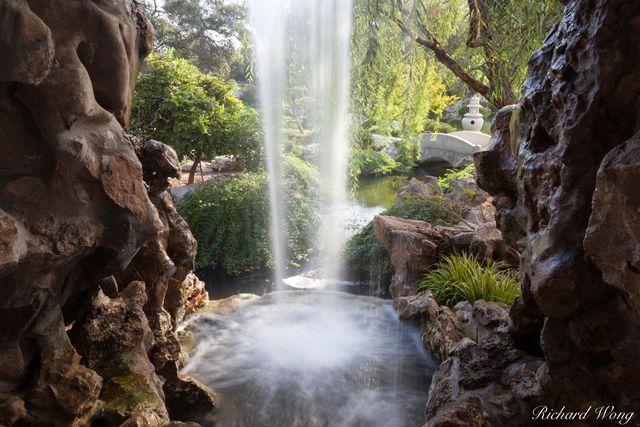
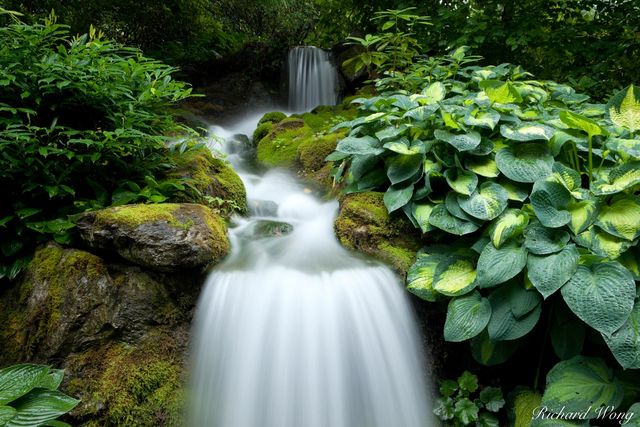
How I Print My Waterfall Photographs
Every waterfall print starts with my original raw file and a custom color profile built for the specific material it's going on. That last part matters more than people expect. A file that looks right on paper will look flat behind acrylic, and a file prepared for acrylic will look harsh on a matte cotton rag. I prepare a separate file for each.
- Papers: Canson Infinity and comparable museum-grade cotton rag and baryta substrates. These are acid-free, lignin-free, and rated for archival display life.
- Inks: Pigment-based archival inks rather than dye inks. Under normal indoor display conditions, pigment prints on cotton rag are rated in the range of 100 years or more before noticeable fading, which is the practical difference between a photograph and a poster.
- Acrylic face mounts: TruLife Acrylic bonded directly to the print face. TruLife is anti-reflective and abrasion resistant, and the face mount process seals the print permanently against air and moisture. This is the finish I recommend most often for waterfall images because the optical depth of the acrylic does something to moving water that glass doesn't.
- Metal: ChromaLuxe metal prints, which use dye sublimation to fuse the image into a coated aluminum panel rather than laying ink on top of it. ChromaLuxe is the substrate most serious print labs standardize on, and it handles humidity better than anything else I offer.
Which Print Material Works Best for a Waterfall Photograph?
For most waterfall images I recommend an acrylic face mount, because the depth of the acrylic gives moving water a sense of dimension that flat surfaces flatten out. Metal is the better answer for humid rooms. Paper under glass is the right choice if you want a traditional framed look or you're matching existing framed work on a wall.
| TruLife Acrylic Face Mount | ChromaLuxe Metal | Archival Paper, Framed | |
|---|---|---|---|
| Look | Deep, luminous, glass-like depth | Slight sheen, very high contrast | Matte or satin, traditional gallery look |
| Best for waterfalls | Long exposures, dark canyon scenes, tropical greens | High-contrast white water, black and white work | Softer fog and forest scenes |
| Glare | Anti-reflective, works in bright rooms | Some sheen under direct light | Depends on glazing (specify anti-reflective) |
| Humidity | Sealed, handles bathrooms and kitchens | Best in class, fully non-porous | Not recommended for wet rooms |
| Hanging | Ready to hang | Ready to hang | Requires framing |
| Best size range | 36" and up | Any size | Up to about 36" |
Waterfall Print Sizes and Where They Fit
| Print Size | Recommended Spaces | Framing Options |
|---|---|---|
| 16" x 24" | Intimate spaces, offices, hallway groupings | Loose prints, metal prints |
| 24" x 36" | Living rooms, bedrooms | Metal prints, acrylic mounts |
| 40" x 60" | Statement walls, lobbies | Museum-quality framing, acrylic |
| 48" x 72" | Large spaces, galleries, corporate lobbies | Acrylic and custom framing solutions |
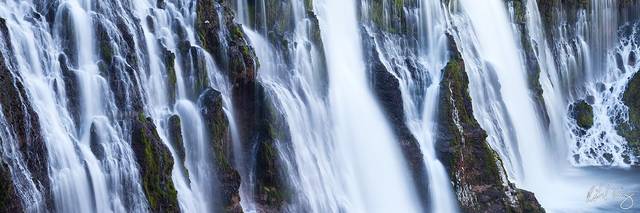
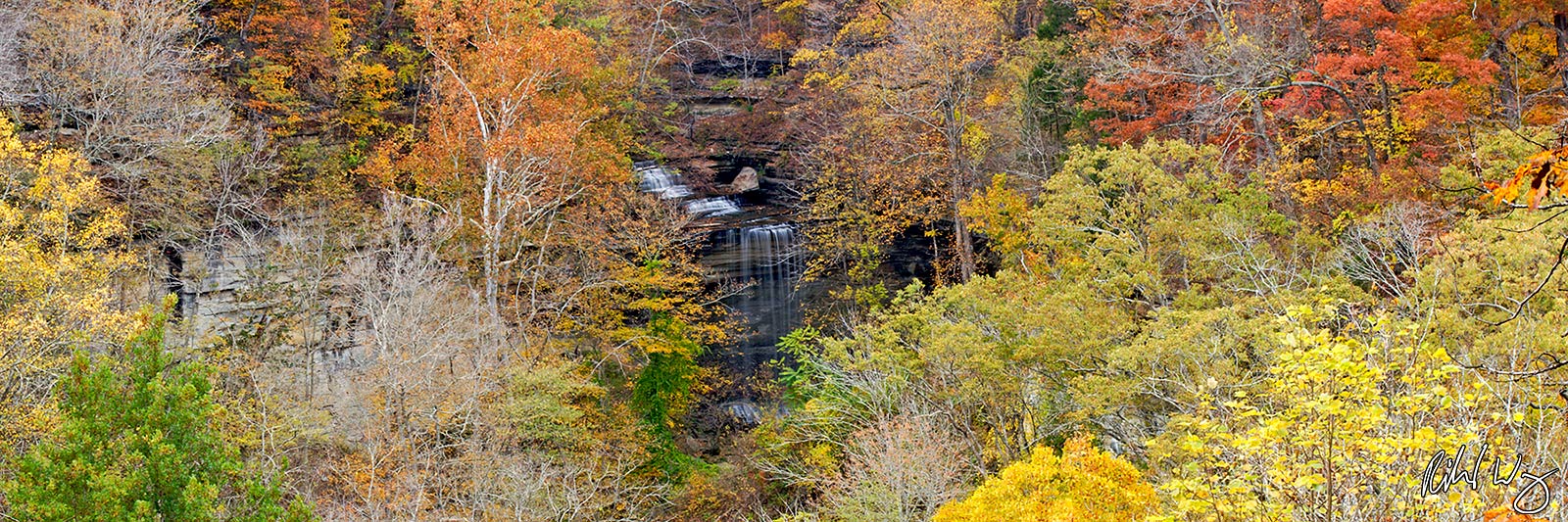
The panoramic images in this gallery, Burney Falls Panoramic and Big Clifty Falls Panoramic, are a different proposition. Panoramas want horizontal runs of wall that most rooms don't have. In practice that means above a sofa, above a headboard, or along a hallway.
Designing a Room Around a Waterfall Print
A waterfall photograph is a vertical subject in a mostly horizontal room, and that's the thing to work with.
Tall waterfall images like Yosemite Falls or Multnomah Falls add vertical scale to entryways and stairwells with high ceilings, where a horizontal piece would look stranded. In rooms with standard eight or nine foot ceilings, a horizontal frame like Gates of the Valley or the Cataract Creek forest scene usually sits better above a sofa or a credenza.
Color is the other half of it. Waterfall photos are mostly greens, greys, cool blues, and the near-black of wet rock. That palette gets along with warm woods, brass, and off-white walls, and it works against a dark accent wall better than most people expect.
Match the picture to how much color the room already has. My Canadian Rockies prints run cooler and more saturated because of the glacial water. The Marin County fog images are close to monochrome and are the safer pick for a room that's already busy.
Placements that reliably work for a waterfall print:
- Above a fireplace. A calm image balances a visually hot feature.
- Directly opposite the door of a bedroom or office, so the photograph is the first thing you see walking in.
- Along a hallway, as a group of three or four smaller prints from the same region. Four Columbia River Gorge falls in a row tells a story one print can't.
- High-ceiling entryways and stairwells, using a tall vertical image.
This is the part of biophilic design that art can actually do. Biophilic design is the practice of bringing natural elements and natural patterns into built environments, and Terrapin Bright Green's widely cited framework lists "presence of water" as one of its fourteen patterns. Most homes can't install a water feature. A large waterfall photograph is the practical substitute.
Why Fine Art Waterfall Photography Holds Its Value
Print value comes down to five things: what it's made of, who made it, whether you can prove where it came from, how many exist, and how you take care of it.
- Edition size: Some of my landscape photography prints are released as limited editions of 25, and each of those ships with a signed certificate of authenticity. Twenty-five is a small edition and I want to be clear about why that matters. The fact is that "limited edition" has been so abused in the print market that the phrase has almost stopped meaning anything. You'll see editions of 250, 500, even 950 marketed as limited, which is really just a production run with a number on it. An edition of 25 is a real constraint. Once those 25 are sold, that image is never printed at that size again, and the people holding one hold one of 25 in the world. The rest of my waterfall prints are open edition, which keeps it accessible for people who want the photograph on the wall rather than the scarcity. Both are printed to the same standard. If you want to know whether a particular image in this gallery is a limited edition or an open edition, ask me.
- Materials and archival life: A pigment print on Canson Infinity cotton rag under normal display conditions is rated well past 100 years. An inkjet poster on resin-coated paper is not. Longevity is not a marketing claim here, it's a materials specification, and it's the difference between an object your kids inherit and an object you replace.
- Provenance: Buying direct from the photographer means the chain of custody is one link long. I made the photograph, I prepared and profiled the file it's printed from, and on the limited editions I sign the certificate myself. There's no reseller, no stock library, and no question about whether the image was licensed from somewhere.
- The artist behind it: I've been photographing waterfalls and forests for more than 25 years and the work is in private collections and commercial installations. An established, documented body of work is what separates a photograph with a name attached from a decorative print with a SKU.
- Condition: This is the one buyers control. Keep any print out of direct sunlight, avoid unconditioned spaces like garages and uninsulated sunrooms, and the archival materials will do the rest.
Why Buy Directly From Richard Wong Photography
When you buy from a print-on-demand site, an algorithm sizes your file and a machine you'll never hear about outputs it. When you buy waterfall wall art from me, you get a conversation first.
I offer personal art consultations to work out which material and print size actually suit your space. Room lighting in particular changes the answer more than people expect. A waterfall print that looks perfect in a north-facing room can look muddy in a dim hallway.
You're also dealing with the photographer who created the photograph. You can ask what the conditions were that morning in the Columbia River Gorge and get a real answer.
Art Services:
- Personal consultation on art selection
- Custom sizing and framing recommendations
- Corporate and healthcare art programs
- Licensing for commercial and editorial use
Waterfall Print Material Options:
- Ready-to-hang TruLife Acrylic face mounts
- Ready-to-hang ChromaLuxe metal prints
- Loose archival prints for local framing
Common Questions About Waterfall Prints
Can I hang a waterfall print in a bathroom?
You can hang your waterfall print in a bathroom but the material matters. For high humidity rooms like bathrooms and kitchens, choose a ChromaLuxe dye-sublimated metal print. Metal prints are non-porous. Avoid paper under glass in a wet room, because moisture can get behind the glazing over time and cause the print to cockle or foxing to develop.
What size waterfall print should I get for my living room?
For a standard living room wall above a sofa, a 24" x 36" print is the reliable choice and 40" x 60" is the statement version. The usual mistake is going too small. A good rule is that the piece should span roughly two-thirds the width of the furniture below it. Send me your wall measurements and I'll give you a specific recommendation.
How long will a fine art waterfall print last?
Pigment prints on archival cotton rag papers are rated in the range of 100 years or more under normal indoor display conditions, away from direct sunlight. Acrylic face mounts and sublimated metal prints are sealed against air and moisture, which adds another layer of protection.
Are your waterfall prints limited editions?
Selected images are released as limited editions of 25, and every limited edition print comes with a signed certificate of authenticity. When an edition of 25 sells out, that image is not printed again at that size. The rest of the gallery is open edition, which means it stays available and is priced accordingly. Contact me and I'll tell you which category a specific photograph falls into.
Do you sell prints of waterfalls that aren't shown in this gallery?
This waterfall photography gallery is a selection, not the full archive. If you're looking for a specific waterfall image in Yosemite, the Columbia River Gorge, Banff, Maui, or anywhere else I shoot, ask me and I'll check what I have.
What's the difference between a fine art photographic print and a canvas print?
Canvas has a visible woven texture that competes with fine detail, which is a real problem in a waterfall image where the whole subject is fine detail in moving water. Fine art photographic printing on smooth cotton rag, acrylic, or metal holds the texture in the water and the moss. I don't offer canvas for that reason.
Do you license waterfall images for commercial use?
Yes. I handle licensing directly for editorial, commercial, and interior design use. Contact me with the intended use, territory, and duration and I'll quote it.
Contact Richard Wong Photography
If you're considering a waterfall print for your home, office, or a client project, get in touch. Tell me the room, the wall size, and the light it gets, and I'll narrow the gallery down to a few pieces that will actually work. I'm happy to answer questions about materials, sizing, or the locations themselves. Contact me directly to discuss your art project.
About the Photographer
Richard Wong is a California landscape and nature photographer based in the San Francisco Bay Area, specializing in waterfall and forest photography. He has been photographing professionally for more than 25 years, with work made throughout California, the Pacific Northwest, the Canadian Rockies, Hawaii, and the American Midwest and Northeast. His photographs are held in private collections and installed in homes, offices, and healthcare facilities.